Build Experience. Build Skills. Build Direction.
What Should My Child Do After High School If They Don’t Want College Yet?
More families are asking what to do if their child isn’t ready for college after high school. This guide explores productive alternatives like work experience, structured programs, travel opportunities, and skill development that can help young adults build independence and direction before committing to college.
POST HIGH SCHOOL PLANNINGPARENTING TEENSCOLLEGE ALTERNATIVES
Cut River Farm
1/7/20263 min read
What Should My Child Do After High School If They Don’t Want College Yet?
If your teen is graduating soon and you’re not sure what comes next, you’re not alone.
This is one of the most common—and stressful—moments families face.
The good news: you don’t need a perfect plan.
You just need a clear next step.
Below is a simple way to start.
For many families, the expectation after high school has always been clear: graduate, enroll in college, and start working toward a degree.
But today, more students are questioning that path.
Some feel burned out after years of school. Others simply aren’t sure what they want to study yet. And many are becoming increasingly aware of the cost of college and wondering whether it makes sense to jump into a four-year commitment without a clear direction.
For parents, this can feel unsettling.
If your child says they don’t want to go to college right away, you might wonder:
• Are they falling behind?
• Will they lose momentum?
• Are they just avoiding responsibility?
In reality, choosing not to attend college immediately doesn’t have to mean drifting or giving up on education. In many cases, a thoughtful year of real-world experience can actually help young adults develop clarity, confidence, and motivation.
The key is structure and intention.
Why Some Students Benefit from Waiting
College works best when students arrive with a sense of purpose. When a student knows why they are there and what they want to pursue, they tend to engage more deeply with their classes and take better advantage of opportunities.
But many students graduate high school without that clarity.
Taking time to work, travel, learn practical skills, or explore different environments can help students:
• build independence
• gain real-world work experience
• understand their strengths and interests
• develop financial awareness
• grow in maturity and confidence
Instead of seeing this time as a delay, it can be viewed as a period of exploration and growth.
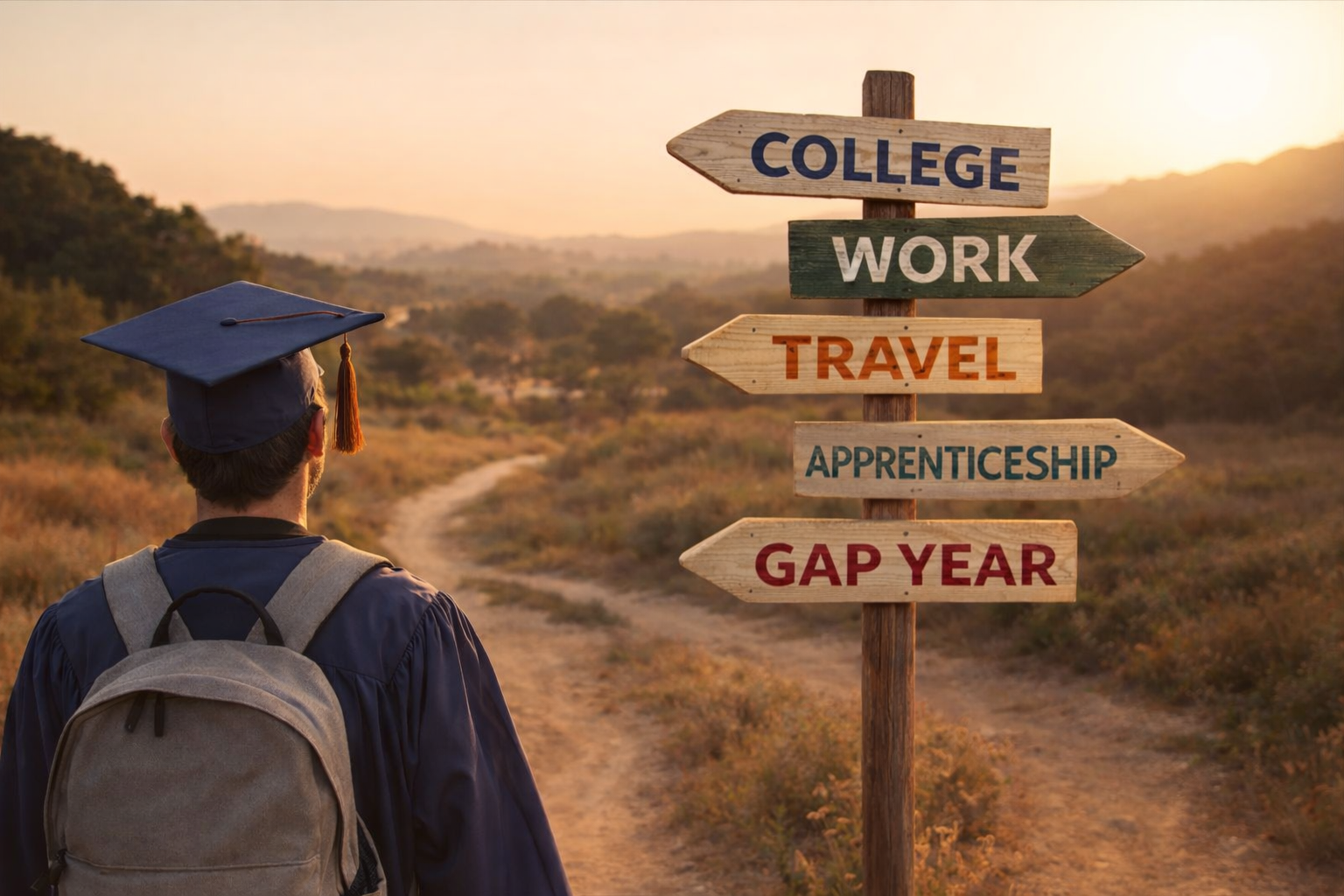
Real-World Paths Students Can Explore
There are many productive options for students who want to explore life beyond the classroom before committing to college.
Seasonal and Adventure Jobs
Many national parks, resorts, and outdoor recreation companies hire young adults and provide housing. These jobs allow students to meet people from around the world while gaining work experience.
Structured Programs
Programs like the Disney College Program combine work experience with community living and skill development. These opportunities allow students to build confidence and independence while experiencing something new.
Trade and Skill Exploration
Some students use this time to explore trades, certifications, or hands-on industries. Working alongside professionals can provide a realistic view of careers that traditional school settings don’t always show.
Travel and Cultural Experiences
Language schools, work-exchange programs, and international travel opportunities allow young adults to gain perspective while learning how to navigate unfamiliar environments.
Local Work and Saving Money
Even staying local and working full-time can be incredibly valuable. Students can build savings, develop responsibility, and begin understanding what different types of work feel like.
The Importance of Having a Plan
The difference between a productive year and a drifting year usually comes down to structure.
Without a plan, it’s easy for time to disappear into video games, part-time work with no growth, or a lack of direction.
But with a clear plan, a year after high school can become a powerful transition into adulthood.
A structured year might include:
• a work goal
• financial savings targets
• travel or program experiences
• skill development
• career exploration
This type of approach helps young adults move forward rather than simply waiting for life to begin.
A Different Way to Think About the Years After High School
For generations, families have treated the years after high school as a race toward college degrees.
But more parents are beginning to ask a different question:
What if the goal isn’t to rush into college, but to build a life before committing to a degree?
Real-world experience can give students something many classrooms cannot — perspective.
And sometimes perspective is exactly what helps a young adult decide what direction they truly want to pursue.
Want Help Creating a Structured Plan?
If your child isn’t ready for college yet, having a clear plan can make all the difference.
Our guide The Post High School Plan helps families create structure, explore real-world opportunities, and design a productive year after graduation.
Inside the guide you'll find:
• practical planning frameworks
• real-world opportunity ideas
• ways to build independence and direction