Build Experience. Build Skills. Build Direction.

How to Become a Millwright (One of the Best-Paid Trades Without a Four-Year Degree)
How to become a millwright without a four-year degree — what they do, real BLS salary data ($63K–$100K+), and the paid apprenticeship path to get started after high school.
CAREERS WITHOUT A COLLEGE DEGREEPOST HIGH SCHOOL PLANNING
Jon & Angela Stoyak
6/18/20263 min read
How to Become a Millwright (One of the Best-Paid Trades Without a Four-Year Degree)
There's a job hiding in nearly every factory, power plant, and processing facility in America that most high school graduates have never heard of. It pays well, it's in high demand, and you can enter it with a high school diploma and a willingness to learn on the job. It's called a millwright — and if your kid is good with their hands and likes the idea of getting paid to learn instead of paying to learn, this one deserves a serious look.
What a Millwright Actually Does
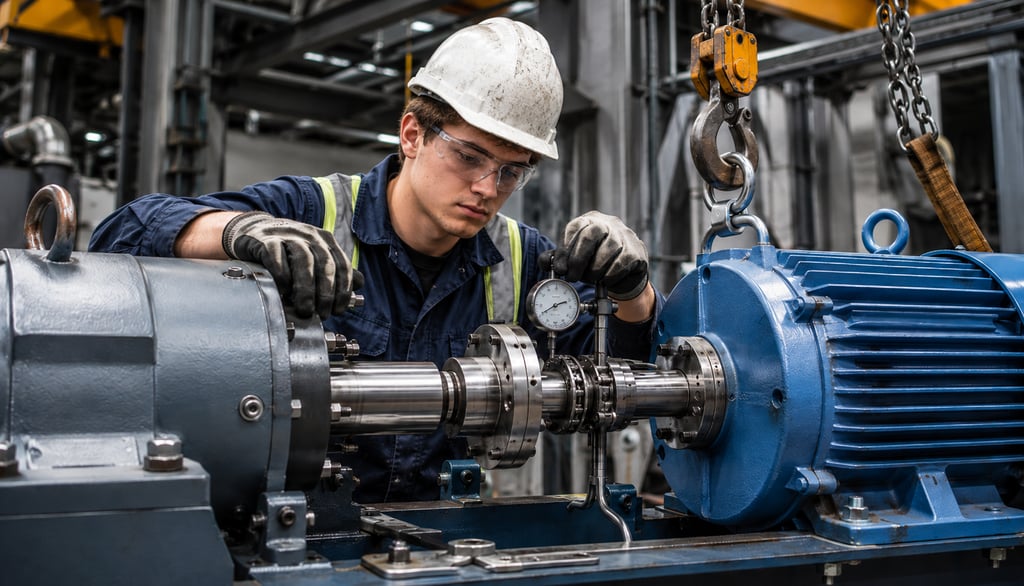
A millwright installs, maintains, repairs, and moves the heavy machinery that keeps industrial facilities running. When a factory brings in a massive new production line, a millwright sets it in place, levels it to within a fraction of a millimeter, aligns the shafts and motors, and gets it running. When something breaks down, they're the ones who diagnose it and fix it — often under pressure, because every hour that machine is down costs the company money.
Its precision work disguised as heavy-equipment work. Millwrights read blueprints and schematics, use precision measuring tools, weld, rig and hoist multi-ton equipment, and align rotating machinery. No two days look quite the same, and the work genuinely matters — nothing in the building runs without them.
The Pay
Here's where it gets interesting. According to the U.S. Bureau of Labor Statistics (May 2024 data), the broader occupation group that includes millwrights — industrial machinery mechanics, machinery maintenance workers, and millwrights — had a median annual wage of $63,510. Millwrights specifically tend to land at the higher end, with national figures putting their median around $66,000, and experienced millwrights in manufacturing, utilities, and unionized shops regularly earning well into the $80,000–$100,000+ range with overtime.
And overtime is common in this field — when a line goes down, millwrights are the ones called in, often at premium pay.
That's a real, lucrative income from a path that starts with a high school diploma.
How to Get In
This is the part parents love. The most common route to becoming a millwright is an apprenticeship — typically a program that can last up to four years, combining paid on-the-job training with classroom instruction. You earn a paycheck the entire time, and you graduate with no student debt and a journeyman credential that's recognized nationwide.
Common entry steps:
Finish high school — a diploma or GED is the typical baseline. Strong math and shop classes help.
Apply to an apprenticeship — through a union (the United Brotherhood of Carpenters runs major millwright programs), a trade school, or directly with an employer like a manufacturer, utility, or industrial contractor.
Learn while you earn — work alongside journeyman millwrights, rotating through welding, rigging, alignment, and machine installation.
Earn your journeyman status — after completing the program and required hours, you're a fully credentialed millwright able to command top pay.
Some people start as a general maintenance worker or industrial machinery mechanic and move into millwright work as they build skills. There's no single locked door — there are several ways in.
Is It Worth It?
The demand answer is yes. BLS projects the industrial machinery mechanics, maintenance workers, and millwrights' group to grow 13% from 2024 to 2034 — much faster than the average for all occupations — with roughly 54,200 openings each year over the decade. A big share of those openings come from experienced workers retiring, which means the people entering now are stepping into a field that needs them.
The honest tradeoffs: it's physical work, sometimes in hot, loud, or cramped conditions. It can involve being on call, night shifts, and travel to job sites. Safety matters — hardhats, hearing protection, and good habits are non-negotiable. But for someone who'd rather build a skilled, well-paid career with their hands than sit through four years of lectures and loans, a millwright apprenticeship is one of the best-kept secrets out there.
It's exactly the kind of path we believe in: real skills, real momentum, and a lucrative life built by layering effort and training over time — no four-year degree required.
Want a complete roadmap of high-paying careers your teen can enter without a four-year degree? Grab The Post High School Plan — A Practical Guide to Skill, Savings & Real-World Experience | Cut River Farm — 33 chapters and 10 worksheets to help your family build a real, money-smart plan after graduation.
Want to see more high-paying careers like this one? Check out our roundup of 15 High-Paying Jobs You Can Land Without a Four-Year Degree — and find the path that fits your kid.
15 Highest-Paying Jobs Without a 4-Year Degree (2026 Salaries) | Cut River Farm