Build Experience. Build Skills. Build Direction.

How to Become a Lineman (Earn $92K+ With a Paid Apprenticeship — No Four-Year Degree)
Learn how to become a lineman without a four-year degree — what the job is, real BLS pay data ($92K median, $114K+ at the top), and the paid IBEW apprenticeship that lets you earn while you train, debt-free.
CAREERS WITHOUT A COLLEGE DEGREEPOST HIGH SCHOOL PLANNING
Jon & Angela Stoyak
6/19/20263 min read
How to Become a Lineman (Earn $92K+ With a Paid Apprenticeship — No Four-Year Degree)
Imagine a career where you start with a high school diploma, get paid to train instead of paying tuition, graduate with zero student debt, and end up earning a median of over $92,000 a year. No four-year degree, no loans — just a paid apprenticeship and a willingness to work hard outdoors. That's the life of a lineman, and it's one of the best-kept secrets in the American workforce.
What a Lineman Actually Does
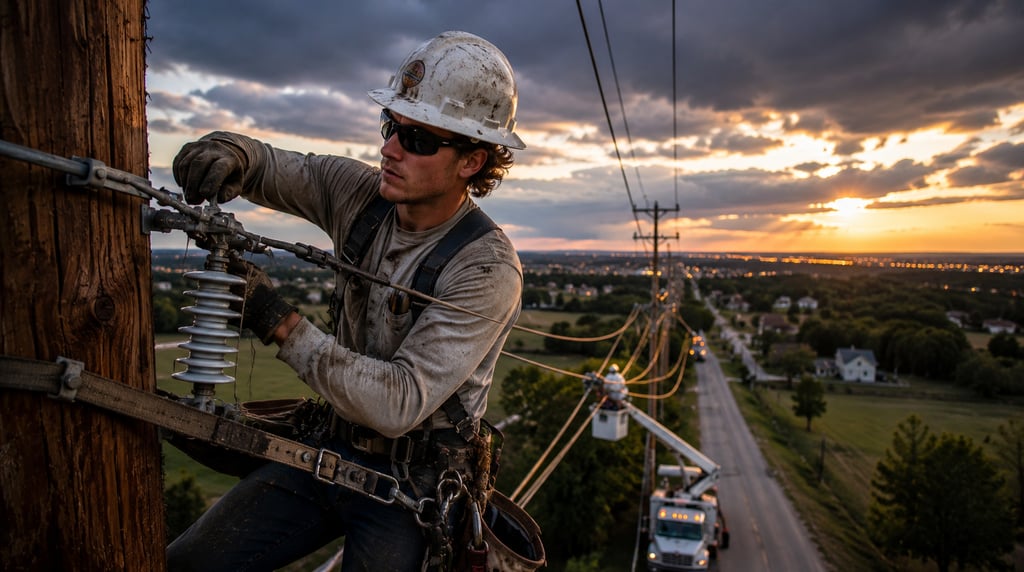
Linemen — formally, electrical power-line installers and repairers — install and repair the cables and wires that carry electricity from power plants to homes, businesses, and entire cities. When a storm knocks out power, linemen are the ones climbing poles and transmission towers in the dark to get the lights back on. When a new neighborhood goes up, they're the ones running the lines that power it.
It's demanding, high-skill work: climbing poles, working from bucket trucks, stringing transmission lines, and handling high-voltage systems safely. An "outside lineman" works on the high-voltage transmission and distribution network — the backbone of the grid. The work happens outdoors in all conditions, often at significant heights, and it genuinely keeps modern life running.
The Pay
Here's the number that stops parents in their tracks. According to the U.S. Bureau of Labor Statistics (May 2024 data), the median annual wage for electrical power-line installers and repairers was $92,560 — that's about $44.50 an hour. The top 10% earned more than $114,000, and in high-demand states the averages climb past $100,000.
And remember — this isn't a salary you reach after four years of tuition and debt. You're earning the entire time you train.
How to Get In
This is the part that makes lineman one of the smartest plays out there: the apprenticeship costs essentially $0, and you earn a paycheck from day one.
Common entry steps:
Finish high school — a diploma or GED is the baseline. Strong math and a comfort with heights and physical work help a lot.
Apply to an apprenticeship — the most established path is through the IBEW / NJATC (Electrical Training Alliance), or through Southeast Line Constructors and independent contractor programs. These are paid, structured 3.5–4 year apprenticeships.
Earn while you learn — apprentices work alongside experienced linemen, building skills on the job while taking classroom instruction. The program itself is free; some programs just ask for roughly $200–$500 in initial gear and tools.
Become a journeyman lineman — after completing the apprenticeship and required hours, you're a fully credentialed journeyman able to command top pay, with room to advance to crew leader and beyond.
No four-year degree. No tuition. A paycheck the whole way through.
Is It Worth It?
For the right person, absolutely. BLS projects employment of electrical power-line installers and repairers to grow 7% from 2024 to 2034 — much faster than the average for all occupations. The grid is aging, demand for electricity is climbing with EVs and data centers, and a wave of experienced linemen is retiring. The people entering now are stepping into a field that needs them, with strong job security and pay that rivals many four-year-degree careers.
The honest tradeoffs: this is serious work. Linemen face real hazards — high-voltage electricity and working at great heights — so safety training and discipline are everything. It's physically demanding, outdoors in all weather, and storm season can mean long hours and emergency call-outs, including nights and weekends. It's not for everyone. But for a young person who wants to work with their hands, doesn't want to sit in a classroom for four years, and wants to earn a six-figure-capable income debt-free, few paths beat it.
That's the heart of what we believe at Cut River Farm: real skills, real momentum, and a lucrative life built by layering training and effort over time — no four-year degree required.
A Smart Way to Stand Out
The modern grid runs on data. AI-powered grid management and ADMS platforms, predictive outage and fault-location systems, drone inspection of transmission infrastructure, and AI weather modeling are all part of utility operations now. Pairing your lineman training with a free credential like Google AI Essentials signals to employers that you understand the tools shaping the future of the grid.
Want a complete roadmap of high-paying careers your teen can enter without a four-year degree? Grab The Post High School Plan — A Practical Guide to Skill, Savings & Real-World Experience | Cut River Farm — 33 chapters and 10 worksheets to help your family build a real, money-smart plan after graduation.
Want to see more high-paying careers like this one? Check out our roundup of 15 High-Paying Jobs You Can Land Without a Four-Year Degree — and find the path that fits your kid.
15 Highest-Paying Jobs Without a 4-Year Degree (2026 Salaries) | Cut River Farm