Build Experience. Build Skills. Build Direction.

How to Become a Truck Driver (CDL Class A) Without a Four-Year Degree
A CDL Class A puts you in a tractor-trailer hauling freight cross-country — a $57K median, no four-year degree, and training in weeks. Here's the honest pay, how to get licensed, and how it differs from Class B.
CAREERS WITHOUT A COLLEGE DEGREEPOST HIGH SCHOOL PLANNING
Jon & Angela Stoyak
7/17/20265 min read
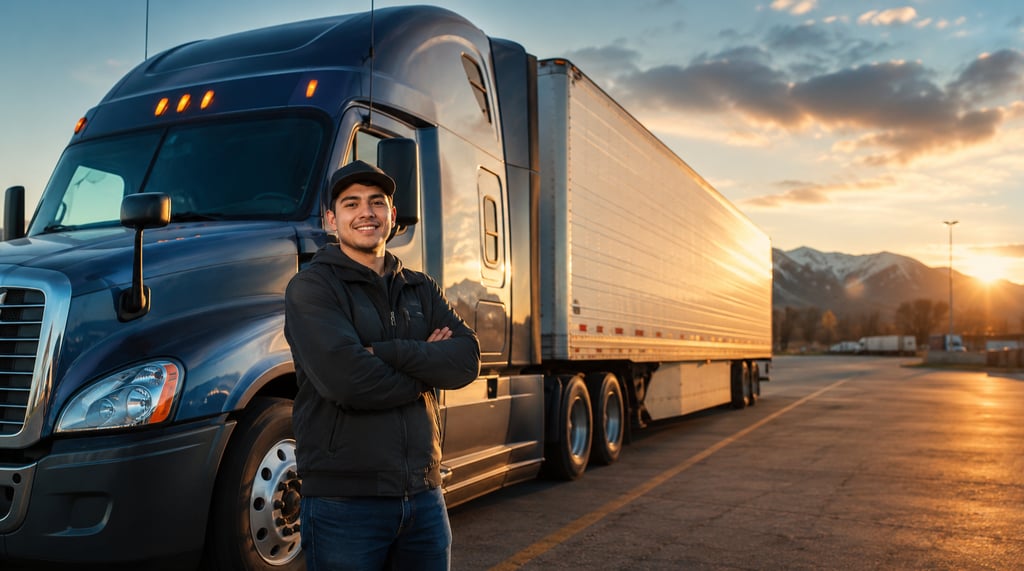

How to Become a Truck Driver (CDL Class A) Without a Four-Year Degree
There's a job that keeps the entire country stocked — the food on the shelves, the packages on the porch, the materials on every job site all move because someone drove them there — and you can train for it in a matter of weeks, with no four-year degree. It's the CDL Class A driver: the tractor-trailers and long-haul freight that move goods across the country. Truck driving has one of the fastest, most affordable on-ramps of any solid career in America. Let's look at what the work is, what it pays, and who it's genuinely right for.
Note: this post is about the CDL Class A license — tractor-trailers and long-haul or regional freight. If you'd rather stay local and be home every night driving buses, box trucks, or dump trucks, that's the Class B path, and we cover it in our separate guide on how to become a Class B driver.
First principle: the work everything depends on is never really optional
Nearly everything you own spent time on a truck. When drivers stop, shelves empty within days — we've all seen how fast that happens. That's not a small thing; it's a job the whole economy is physically built on. A career tied that directly to something essential carries a kind of built-in security: the need doesn't go away, and it can't be sent overseas. The freight has to physically move, and a person has to move it.
Strip it down: value comes from doing something essential that can't be outsourced or skipped. Trucking is about as essential and as un-outsourceable as work gets — the load has to get from here to there, and that will be true for a long time.
Second principle: a short on-ramp is a feature, not a warning sign
Here's the assumption worth breaking. We tend to assume that if something trains fast and cheap, it must be a bad deal. But speed of entry and quality of career are different things. Truck driving can take you from zero to a commercial license and a paycheck in weeks to a few months — and that fast on-ramp is exactly the point. You start earning quickly, with little or no debt, in a field with steady demand. For someone who needs to be working and earning soon, that short runway is one of the most valuable things a career can offer.
What the job actually is
Class A drivers operate combination vehicles — a tractor pulling one or more heavy trailers — to transport goods over the road. That's sometimes regional routes that get you home daily, and sometimes long-haul (OTR) runs that keep you on the road for days or weeks. The work involves safely operating a large vehicle, inspecting it before and after trips, managing your hours under federal safety rules, keeping records, and sometimes loading and securing freight. It's independent, focused work for someone who's comfortable with long stretches of solo time, takes safety seriously, and doesn't mind a schedule that doesn't look like nine-to-five.
Curious what other careers fit this same "fast on-ramp, essential work" pattern? Our guide to the 15 highest-paying jobs without a four-year degree lays out more of them.
What it pays
The median annual wage for heavy and tractor-trailer truck drivers was $57,440 in May 2024 (BLS) — above the $49,500 median for all workers, and reachable after just weeks of training. The honest spread: the lowest 10% earned under about $38,640, and the top 10% earned more than $78,800.
What moves the number: drivers are often paid by the mile plus bonuses, so miles and route type matter a lot. Long-haul and specialized freight pay more than shorter regional routes. Specialty endorsements are the real lever — hauling hazardous materials (HazMat), tankers, or oversized loads raises your rate, as does team driving and owner-operator status down the line. Pay also climbs sharply with a clean safety record: the jump from year one to year three is significant, because that track record is what unlocks premium freight and better carriers. It's a career where you can raise your own ceiling deliberately.
How to get in without a four-year degree
Finish high school or earn a GED. A clean driving record and the ability to pass a DOT physical and drug screening are what matter most at the start.
Get your Class A CDL. Attend a truck driving school or a company-sponsored training program — often just a few weeks — to earn your Commercial Driver's License. You'll want the Class A specifically, which covers tractor-trailers and the long-haul freight this post is about — distinct from a Class B CDL, which covers straight trucks like box trucks, buses, and dump trucks. Some carriers will even pay for your training in exchange for a work commitment.
Add endorsements. HazMat, tanker, and doubles/triples endorsements each open higher-paying freight. Stack them as you go.
Get hired and choose your lane. Start with a carrier, build a safe record, then move toward the routes and freight that fit your life and pay best — regional, long-haul, or specialized. Experienced drivers can move into owner-operator roles or training and dispatch.
You can be licensed and earning in weeks to a few months — with little or no training debt.
Is it worth it?
The field is projected to grow 4% through 2034 — about average — but the raw opportunity is enormous: about 237,600 openings a year, one of the highest of any occupation, driven largely by turnover and a steadily retiring workforce. Carriers compete for drivers with sign-on bonuses, company-paid training, and premium pay for specialized loads. Getting hired is rarely the hard part.
The honest tradeoffs are real and worth taking seriously. Long-haul driving means significant time away from home, which is hard on family life. The schedule and long hours sitting can take a toll on health, and the job has one of the higher occupational injury and fatality rates because of time on the road. Regional routes solve some of the home-time problem but often pay less than OTR — and if being home every night is the priority, the Class B path is worth a serious look instead. But for a fast, affordable path into steady, essential, no-degree work with a genuinely high ceiling for those who specialize, few things get you earning faster.
The principle underneath it all: the degree was never the thing — the skill and the license are the thing. You don't need four years to hold a job the whole country runs on. Earn the Class A CDL, stack the endorsements, drive safely, add daily effort, and you build a stable, meaningful, well-paid life.
Ready to map your own path? The Foundational Bundle gives you all three of our core guides plus a workbook: More Paths Than You Think (high-paying careers without a four-year degree), the Post High School Plan (how to build your path step by step), and The AI Guide for Life After High School (how to put AI to work in whatever career you choose). Everything you need to pick a direction, build the skills, and turn them into income — no four-year degree required.
Just want the career roadmap? More Paths Than You Think is available on its own.