Build Experience. Build Skills. Build Direction.

How to Become a Boilermaker Without a Four-Year Degree
Boilermaker is one of the trades almost nobody's heard of — a paid union apprenticeship, no four-year degree, and top earners clearing $100K+ with overtime. Here's the honest pay and how to get in.
CAREERS WITHOUT A COLLEGE DEGREEPOST HIGH SCHOOL PLANNING
Jon & Angela Stoyak
7/13/20264 min read
How to Become a Boilermaker Without a Four-Year Degree
There's a trade that builds and repairs the massive steel vessels holding the pressure, heat, and power inside refineries, power plants, and shipyards — the kind of work the whole industrial world quietly depends on — and you can enter it through a paid apprenticeship with no four-year degree. It's called a boilermaker, and it's one of the best-kept secrets in the skilled trades, mostly because almost no one has heard the name. Let's look at what the work is, what it honestly pays, and who it's right for.
First principle: the fewer people who can do it, the more it's worth
Boilermaker isn't a job people stumble into — it's specialized, demanding, and relatively small, with only about 10,400 people doing it nationwide. That scarcity is exactly what gives a skilled boilermaker leverage. When a refinery or power plant shuts down for maintenance, they need certified boilermakers now, and there aren't many to call. That combination — essential work, few qualified hands — is what drives the overtime pay and per diem that push the top of this trade into six figures.
Strip it down: value comes from being able to do something essential that few others can. The obscurity of this trade isn't a drawback — it's the moat. Fewer competitors, urgent demand, and a skill that can't be outsourced or automated.
Second principle: a trade nobody's heard of can still pay like one they have
Here's the assumption worth breaking. We tend to think a career has to be famous to be worth pursuing — that if we've never heard of it, it must be minor. That's backwards. Some of the strongest opportunities are precisely the ones that never get talked about at college nights, because everyone's chasing the handful of paths they already know. Boilermaker is a paid, unionized, six-figure-ceiling trade that most high schoolers couldn't define. Once you stop assuming visibility equals value, doors like this one open.
What the job actually is
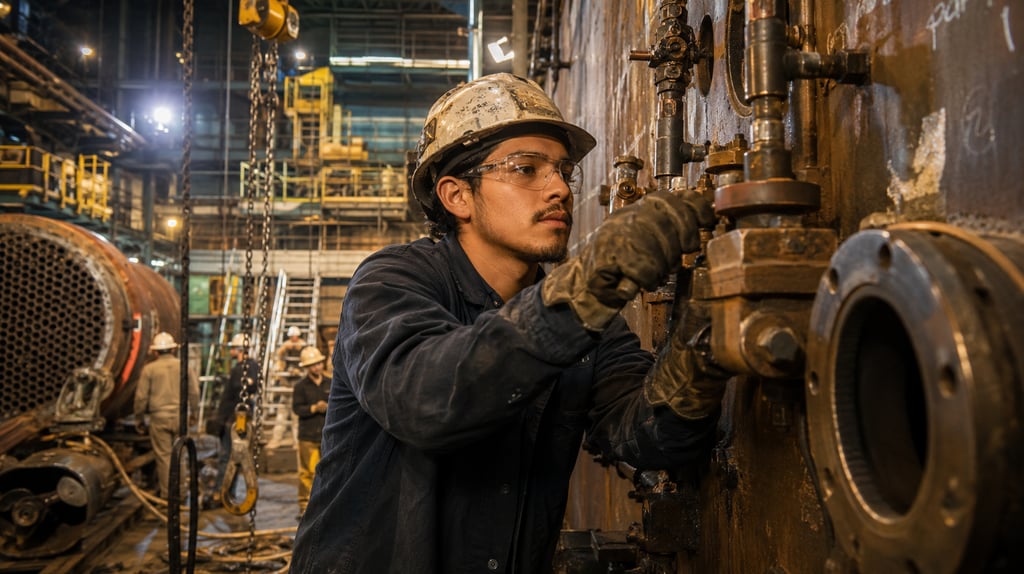
Boilermakers assemble, install, maintain, and repair boilers, tanks, and other large vessels that hold liquids and gases under extreme pressure. The work includes reading blueprints, welding, rigging heavy components, installing heat-resistant brick, and inspecting valves, gauges, and controls during maintenance shutdowns. You'll find boilermakers in power plants, refineries, shipyards, and on major industrial construction sites. It's physically demanding, hands-on work — often in cramped, hot, or awkward spaces — for people who take pride in doing heavy, high-skill work that genuinely matters.
Curious what other careers fit this same "obscure but well-paid" pattern? Our guide to the 15 highest-paying jobs without a four-year degree lays out more of them.
What it pays
Here's the honest picture, straight from the Bureau of Labor Statistics (May 2024): the median annual wage for boilermakers was $73,340 — well above the $49,500 median for all workers. The spread is wide: the lowest 10% earned under about $48,390, and the top 10% earned more than $107,600.
That top end is where the "six-figure trade" reputation comes from, and it's real — but it's important to be straight about how you get there. Boilermakers reach six figures through overtime and per diem, which come in heavy waves during plant shutdowns and refueling outages, not through the base median. The flip side is that much of the work is contract-based, so there can be stretches between jobs. For someone willing to travel to where the work is and put in the overtime hours when a shutdown hits, the earning potential is strong. For someone who needs a steady 9-to-5 in one town, it's a harder fit.
How to get in without a four-year degree
Finish high school. Welding experience, mechanical aptitude, and physical fitness give you a real head start.
Land an apprenticeship. The main route in is a paid boilermaker apprenticeship, typically about four years, often through the Boilermakers union. You earn while you learn — combining on-the-job hours with classroom instruction in welding, blueprint reading, rigging, metallurgy, and safety.
Build your welding and certification credentials. Welding skill is central to this trade; the more certifications you stack, the more valuable and employable you become.
Go where the work is. Boilermakers who are willing to travel to shutdowns and outages capture the overtime and per diem that push earnings toward the top of the range.
You can be earning apprentice wages from day one and working a skilled, well-paid trade in a few years — with no tuition debt.
Is it worth it?
The honest answer depends on the person. BLS projects boilermaker employment to decline about 2% through 2034, so this isn't a growth field — but roughly 800 openings a year come from a workforce that's retiring, and the small size of the trade means less competition for those spots. The work can't be automated or outsourced, which protects it in ways many jobs aren't protected.
The honest tradeoffs are real: it's physically hard work in tough conditions, the schedule and location follow the contracts (which means travel and some downtime between jobs), and the six-figure numbers come from overtime, not the base wage. But for a paid apprenticeship into an essential, high-skill trade that most people have never even heard of — with a genuine path to strong earnings for those willing to travel and work the hours — it's a path worth knowing about.
The principle underneath it all: the degree was never the thing — the skill and the certification are the thing. You don't need four years of tuition to build a career in a trade the industrial world depends on. Layer the apprenticeship, stack the welding certifications, add daily effort, and you build a stable, meaningful, well-paid life.
Ready to map your own path? The Foundational Bundle gives you all three of our core guides plus a workbook: More Paths Than You Think (high-paying careers without a four-year degree), the Post High School Plan (how to build your path step by step), and The AI Guide for Life After High School (how to put AI to work in whatever career you choose). Everything you need to pick a direction, build the skills, and turn them into income — no four-year degree required.
Just want the career roadmap? More Paths Than You Think is available on its own.